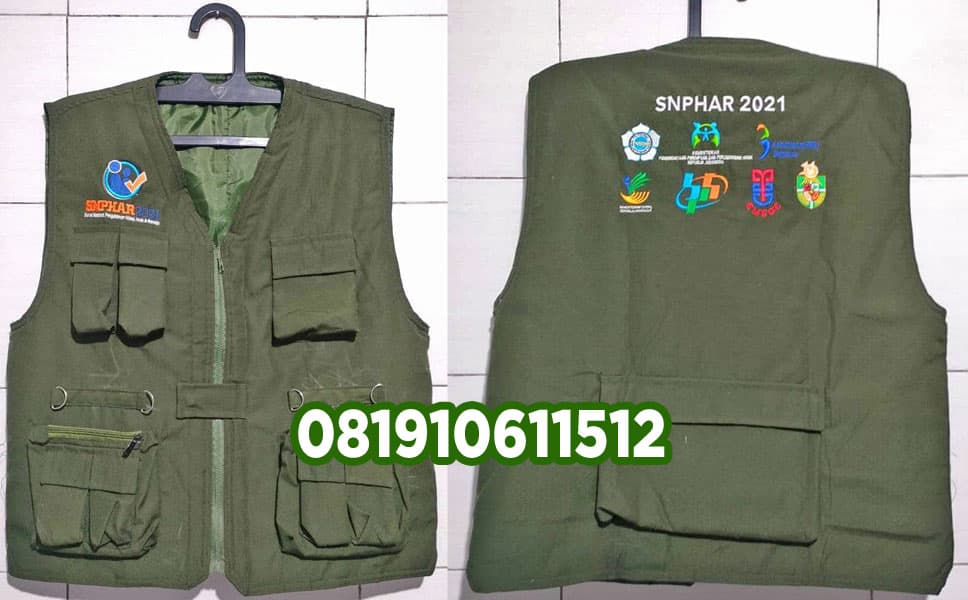
A vest is a sleeveless outer garment worn over other clothing. In the field it earns its place through pockets and visibility rather than warmth, which is why it has become standard kit for survey teams, event crews, journalists, photographers and community organisations.
Custom field vest manufacturing
Design without constraints
Pocket layout, closures, colours and panel construction are all decided by you. We work from a reference garment, a drawing or a description.
Quality and customer satisfaction
Every vest passes quality control before packing. The seams that fail first on cheap vests are the pocket corners and the shoulder joins, so those are what we reinforce.
A straightforward ordering process
Send your specification and size breakdown; we return a quote, then a sample before the full run.
Branding and identity
Embroidered logos, printed backs and name tapes let a team be identified at a glance in a crowd.
Support for communities and events
We produce small runs as readily as large ones, which suits volunteer groups and one-off events.
What sets our vests apart
Custom sizing
Sizes are made to your measurements rather than to a fixed size chart, which matters when a vest is worn over a uniform.
A range of models
From light mesh vests for hot conditions to heavier canvas ones for outdoor work.
Custom embroidered logos
Embroidery outlasts printing on a garment that gets washed frequently and worn hard.
Build quality
Fabric weight, zip quality and stitching are specified before production rather than left to whatever is cheapest.
Flexible, creative design
Colour blocking, reflective tape and contrast panels are all available.
Easy ordering
One conversation on WhatsApp is usually enough to get to a quote.
Types of vest
Field vests
Multi-pocket vests built for outdoor work, survey teams and event crews.
Fashion vests
Lighter, cleaner cuts intended to be worn as part of an outfit.
Work vests
Heavier duty, often with reflective strips for site safety.
Children's vests
Scaled-down versions for school and community programmes.
What a vest is for
Carrying equipment within reach, identifying a team at a distance, and adding a layer without restricting arm movement.
Multi-pocket vest designs
1. Chest pockets
The most accessible position, used for phones, radios and notebooks.
2. Waist pockets
Larger capacity for tools and documents.
3. Sleeve pockets
Small pockets on the shoulder panel for pens and cards.
4. Internal pockets
Secure storage for valuables and documents that should not be visible.
5. Rear pockets
Large flat pockets for maps, folders and waterproofs.
Why the pocket layout matters
A vest with well-placed pockets removes the need for a bag entirely. Getting the layout right for the actual work being done is the single biggest difference between a useful vest and one that gets left behind.
Vest fabrics
1. Polyester
Light, quick-drying and hard-wearing. The most common choice.
2. Canvas
Heavier and more durable, suited to rough outdoor use.
3. Nylon
Strong and water resistant, with a smoother finish than canvas.
4. Twill
A structured weave that holds its shape and takes embroidery well.
5. Fleece
Warm, for cooler highland conditions.
6. Mesh
Ventilated panels for hot and humid working conditions.
7. Combined fabrics
Mesh back panels with canvas fronts, which is usually the best compromise for Indonesian field conditions.