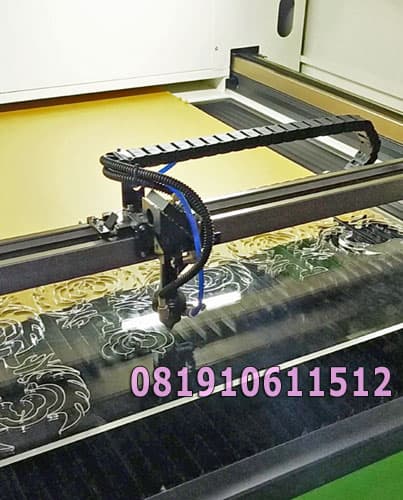
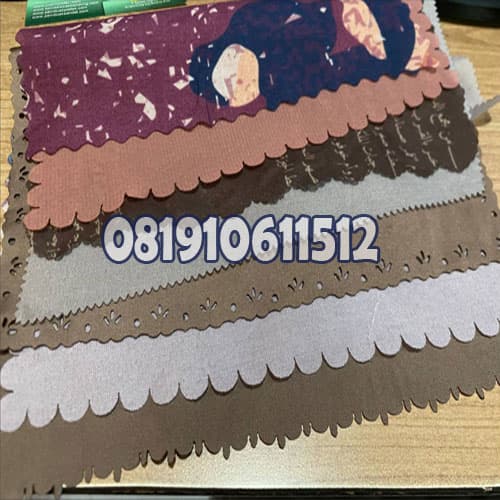
Textile production keeps evolving, and one of the changes that has most affected hijab manufacturing is laser cutting. It replaces hand-cut and scissor-cut edges with sealed, perfectly repeatable ones — and opens up decorative shapes that were never practical to cut by hand.
What laser cutting offers hijab production
- High precision: every piece comes out to the same dimensions, across a run of any size.
- Production efficiency: cutting is fast and needs no pattern-marking beforehand.
- Design range: scalloped, laser-perforated and ornamental edges become straightforward.
- Material savings: nesting the pattern digitally leaves far less waste than manual layout.
A shift in how hijabs are made
The real advantage is the sealed edge. On synthetic fabrics the laser melts the fibres as it cuts, so the edge cannot fray — which removes the hemming step entirely and gives a cleaner, thinner finish than stitching ever produces.
Custom hijab laser cutting at Owl Motekar
We cut to your pattern, whether that is a plain edge, a decorative border or a full perforated design across the fabric.
Working with custom designs
Send a vector file or a physical sample. We convert it into a cutting file, run a test piece on your fabric, and only then move to the full run.
An efficient production process
Because there is no tooling to prepare, a design change costs nothing but file time. That makes small seasonal collections as viable as large staple runs.
Bringing new ideas to a traditional product
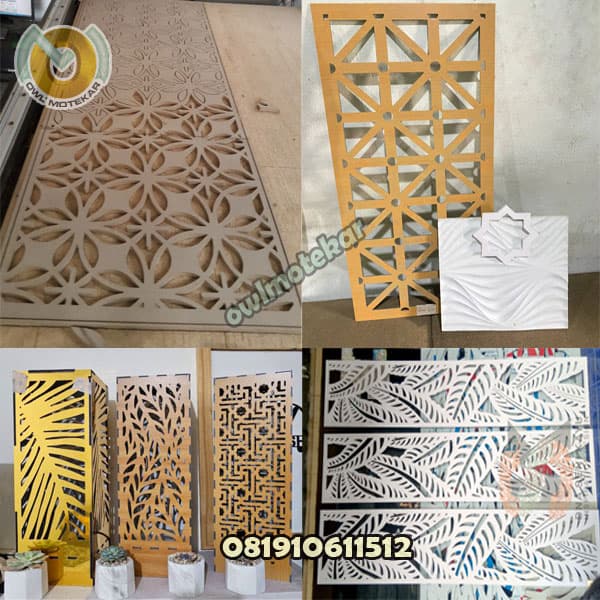
Laser perforation allows patterns that sit somewhere between embroidery and lace, at a fraction of the production time of either.
Our commitment to customers
We test on your actual fabric before committing to a run, because different weaves and fibre blends behave differently under the beam.
Where laser cutting helps most
1. Precise, intricate detail
Fine ornamental work reproduces at a consistency handwork cannot match.
2. Unlimited design options
Anything that can be drawn as a vector can be cut.
3. Faster production
Cutting and edge-finishing happen in a single pass.
4. A high-quality finish
Sealed edges stay clean through washing and wear.
5. Wide customisation
Sizes, shapes and edge treatments can differ within the same order.
6. Less material waste
Digital nesting fits more pieces per metre of fabric.
Fabrics that suit laser cutting
1. Cotton
Cuts cleanly, though the edge does not seal the way synthetics do.
2. Silk
Delicate and best cut at low power; produces a very fine edge.
3. Polyester
The ideal material — the edge seals completely and never frays.
4. Chiffon
Notoriously difficult to cut by hand, and one of the materials laser cutting improves most.
5. Blended fabrics
Behaviour depends on the synthetic content, so we test first.
6. Layered or textured fabrics
Can be cut, though settings need adjusting for thickness.
Design without the usual limits
Send us your pattern and fabric, and we will run a test piece before quoting the full order.